
True or false, Golf is an imprecise game where you can succeed with little attention to detail and brute force?
If you answered, true, this could explain why you are frustrated by the game and have not found success.
The reality is Golf IS A VERY precise game, where the details matter and beyond discussions of equipment, like drivers, irons, wedges, putters, little is discussed about the details of the actual golf ball.
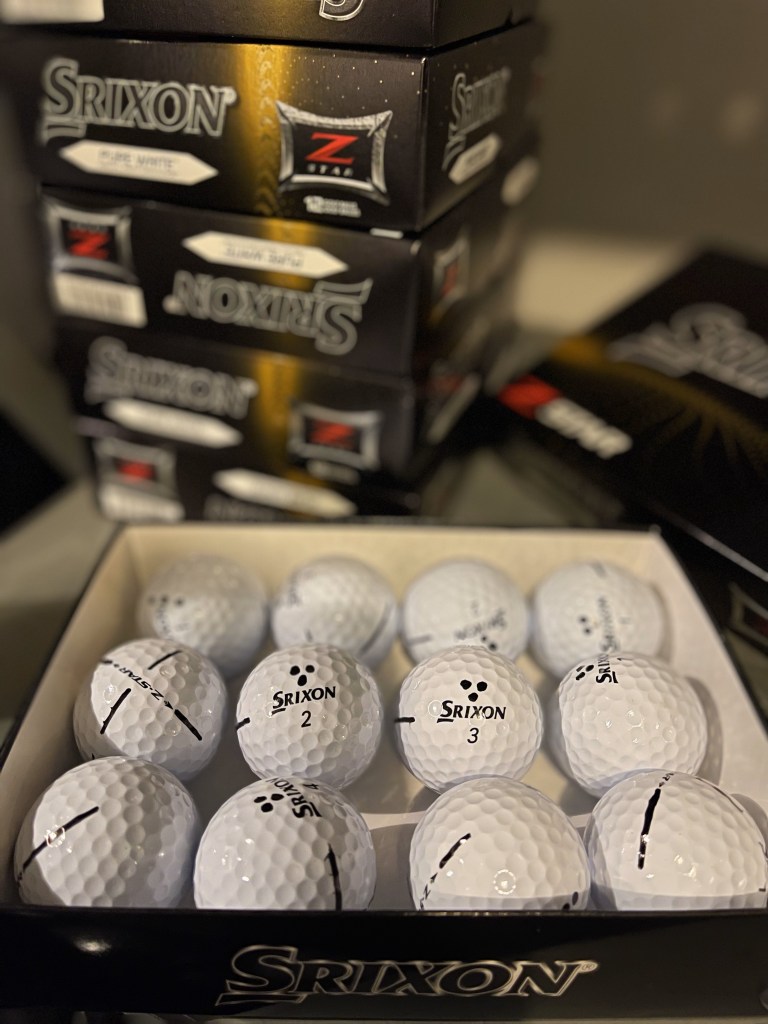
On a number of social media groups that I follow, a common question is: does the type of golf ball you play matter?
I am astounded by the variety of comments and the inconsistency of the answer, which, if you agree that Golf is a precise game, and the details matter, then the ball you play matters significantly.
In addition, I find that most golfers don’t know the difference in golf balls, and don’t understand the reaction that golf balls have to specific shots off the tee, from the fairway, on and around greens.
Two Families
The significant difference in golf balls is broadly based on two different constructions: 2-piece construction vs +3-piece construction. (For the sake of simplicity and audience, I have grouped all the 3 plus layered constructed golf balls together.)
Go wild on Google if you want to know more about the materials and manufacturing of specific brands and for the purposes of this discussion we will stay focused on this main distinction.
2-piece golf balls are for high handicap players
As a general rule, 2-p balls are harder and react more off the club face – that is they are designed to go farther with less emphasis on precision. A typical 2-p ball will have a “ting” sound off a driver or iron club face. They will also bounce more off your putter, forcing you to be more delicate with your putts.
So while you might smash one off the tee box, you might also smash it over the green on approach. Or more typically with high HCP players, you might smash it past the pin chipping or putting onto the green.
If your handicap is +13 (or your best score is an 85), you ought to consider using ONLY 2-p AND if you use only 2-p balls to play and more importantly practice, your brain will begin to calibrate to that ball construction. You will develop a better touch around the greens and putting.
The key is consistency! And while it will be SOOOO tempting to tee up that PV1 you found on the last hole – don’t. PV’s and other 3-p balls will not favor your game. Hand it over to your low handicap playing buddy…he’ll appreciate the extra $4 in his pocket!
+3-piece balls are for mid and low handicap players
Once you break 90, three out of every five rounds, you are likely ready for a +3-p ball.
The +3-p ball is designed for compression and spin. It’s designed to help you maximize your distance off the tee (as your swing speed increases) and then control the ball on your approach and chip shots.
The typical +3-p ball sounds “heavier” or more solid – especially on the putting green. And once you make this switch, don’t look back.
Well maybe break out that Ultra Distance 500 at your next Captain’s Choice and let it fly!
Why all this matters?
Back to the question asked at the beginning of this blog: Details Matter. Consistency of the ball you play is as important as the consistency of the clubs you play. You aren’t likely to have success if you randomly change your clubs on each round or worse in the middle of a round – why would you do that with one of the most important pieces of equipment in the game.
Lot’s of options out there
Once you have established which family of ball you should be playing, there are lots of options on the market. I recommend you take time and note which golf ball you seem to play best. Try different brands to find the one that you connect with best. There are some really great options that are both affordable and well made to hold up during a round.
Stay tuned for what I play and what I recommend in a future blog.



 English Major Golfer
Leave a comment